Saturday, 21 February 2026

The Supreme Court applies

By Kim Hansen - Own work, CC BY-SA 3.0,
https://commons.wikimedia.org/w/index.php?curid=7421277


Jane Lambert

Supreme Court (Lord Hodge, Lord Briggs, Lord Hamblen, Lord Burrows and Lord Stephens) Dairy UK Ltd v Oatly AB [2026] UKSC 4 (11 Feb 2026)

On 11 Feb 2026, the Supreme Court of the United Kingdom handed down judgment in Dairy UK Ltd v Oatly AB [2026] UKSC 4.  This was a trade mark case which I discussed in The POST MILK GENERATION Appeal to the Supreme Court- Dairy (UK) Ltd v Oatly AB on 19 Feb 2026 in NIPC Law.  The reason why I mention it here is that the case turned on the construction of Part III of Annex VII of Regulation (EU) No 1308/2013 of the European Parliament and of the Council of 17 December 2013
establishing a common organisation of the markets in agricultural products and repealing Council Regulations (EEC) No 922/72, (EEC) No 234/79, (EC) No 1037/2001 and (EC) No 1234/2007 in accordance with the Retained EU Law (Revocation and Reform) Act 2023.

I traced the legislation's passage through Parliament in the Retained EU Law (Revocation and Reform) Bill on 22 Oct 2022, the REUL Bill First Update on 6 Dec 2022 and the REUL Bill Second Update on 5 Feb 2023.  After the Bill became an Act, I wrote The REUL (Revocation and Reform) Act 2023 - Third Update on 31 Oct 2023 and The REUL (Revocation and Reform) Act 2023 - Fourth Update on 13 Jan 2024.  One of the purposes of the Act was "to make provision relating to the interpretation of retained EU law and to its relationship with other law."  S.6 of the Act amended s.6 of the European Union (Withdrawal) Act 2018.

By an application dated 23 Nov 2023, Dairy (UK) Ltd (the British dairy industry trade association) applied to the UK Intellectual Property Office for a declaration that the registration of the sign POST MILK GENERATION for goods in classes 25, 29, 30 and 32 under trade mark number UK00003445440 was invalid on the ground that it had been registered in breach of s.3 of the Trade Marks Act 1994 pursuant to s.47 (1) of that Act.  Dairy (UK) alleged that the mark was deceptive in that it contained the word "MILK" in respect of goods that did not comprise or contain milk or milk products.  It also contended that the use of the term "MILK" for products not made exclusively of milk was contrary to the provisions of Part III of Annex VII of EU Regulation 1308/2013.  It further contended that the registration was contrary to law as Part III of that Annex specifically prohibits the use of the term "milk" for products not made exclusively of milk.

The application was successful in relation to the goods in classes 29, 30 and 32 which were food and drink but not in relation to those in class 25 which were T-shirts.  


Sunday, 23 November 2025

Intellectual Property in St Helena

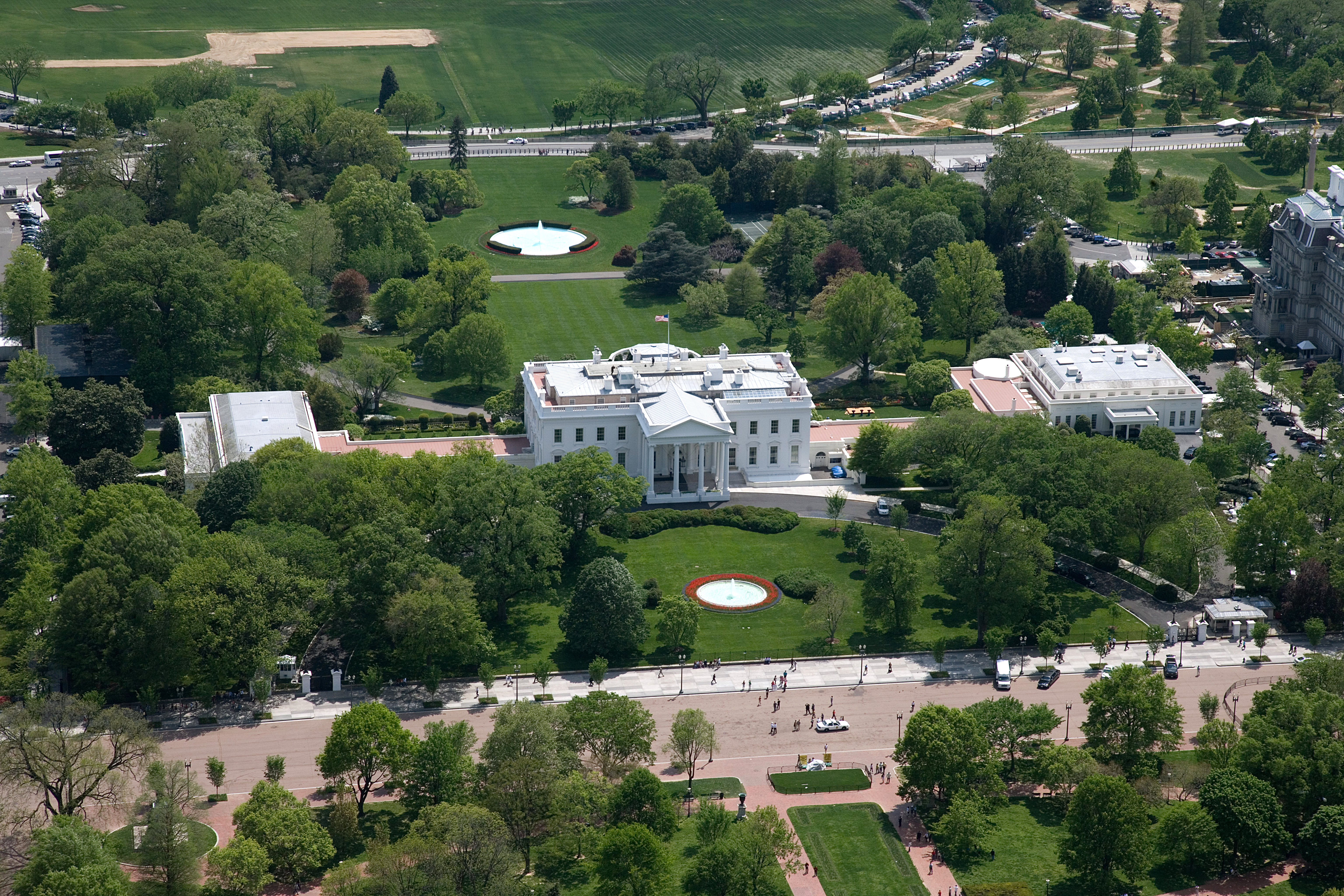
This image was taken by the NASA Expedition 19 crew. - NASA Earth Observatory, Public Domain,
https://commons.wikimedia.org/w/index.php?curid=7030157


Jane Lambert
 

I have recently come across St. Helena Coffee.  It is very rare and very expensive because it is cultivated in modest quantities on a tiny island in the South Atlantic and has very special qualities.  When I first learned of the product, its geographical indication seemed an obvious candidate for legal protection.  When I tried to check it out, I could find no registration under either the UK's protected food names scheme or as a collective or certification mark under s.49  or s.50,  The only registration that I have been able to find is THE ISLAND OF ST HELENA COFFEE COMPANY for goods in classes 16 and 30 by David Henry under trade mark number UK00002192111.

I also found several other products whose geographical indications might benefit from legal protection.  These include rock lobster, tuna, honey and various liqueurs made from local coffee, prickly pears and rum.  St Helena’s Sustainable Economic Development Plan 2018 - 2028 published by the territory's government mentions viticulture on page 26.

Other projects in the plan include opening satellite ground stations and call centres,  encouraging software development and maintenance services, hosting academic research and letting out its locations for filming and programme making.  All those initiatives will require robust copyright, database right and trade secrecy laws.

There is no intellectual property office on St Helena but the territory's legislature has passed legislation to extend United Kingdom patents, trade marks and designs to the island.   S.2 (1) of the Patents (Registration) Ordinance 1927 entitles any grantee of a patent in the United Kingdom or any person deriving a right from such grantee by assignment, transmission or other operation of law may apply within 3 years from the date of issue of the patent to have the patent registered in St Helena.   Upon receiving such an application together with two certified copies of the specification and certificate of grant the registrar must issue a certificate of registration. The certificate of registration confers on the applicant privileges and rights, subject to any conditions established by the law of St Helena, as though the patent had been issued in the United Kingdom with an extension to St Helena.   S.3 and s.6 of the Trade Marks (Registration) Ordinance, 1949 make similar provision for trade marks.  S.2 of the United Kingdom Designs (Protection) Ordinance, 1930 confers upon the registered proprietor of any design registered in the United Kingdom under the Registered Designs Act, 1949 the like privileges and rights as though the certificate of registration in the United Kingdom had been issued with an extension to St. Helena.  

S.3 of the United Kingdom (Design) Ordinance, which restricts recovery of damages where a defendant was unaware of the registration of a design, is a little anomalous in that it refers to "copyright in a design" despite the extensive amendments to the statute by the Copyright, Designs and Patents Act 2025 and the Registered Designs Regulations 2001.  The intention of the legislature appears to be clear but I have not yet found a case on the point.

I have been unable to find any copyright, rights in performances, unregistered design right or trade secrets ordinance but s.3 (1) of the English Law (Applications) Ordinance 2005  applies Adopted English Law to St Helena.  "Adopted English Law is defined as:

"(a) the common law of England, including the rules of equity; and 

(b) the Acts of Parliament which are in force in England at the time of commencement of this Ordinance."

This is qualified by s.3 (2) which provides that the Adopted English Law applies to St Helena only in so far as it is applicable and suitable to local circumstances, and subject to such modifications, adaptations, qualifications and exceptions as local circumstances render necessary.  S.4 (1) further provides that The Adopted English Law applies to St Helena only insofar as it is not inconsistent with— 

"(a) any enactment of the Parliament of the United Kingdom which extends to St Helena otherwise than by virtue of this Ordinance; 4 

(b) any Order of Her Majesty in Council which extends to St Helena otherwise than by virtue of this Ordinance; 5 or 

(c) any provision made by or under any law enacted by a legislature in St Helena." 

Some UK statutes, such as the Freedom of Information Act 2000 and the Human Rights Act 1998, have been disapplied from St. Helena.   However, I have found no disapplication of the Copyright, Designs and Patents Act 1988 or the law of confidence.   S.8 of the Trade Marks (Registration) Ordinance 1949 specifically preserves the action for passing off.

Actions for the infringement or revocation of intellectual property rights are brought in the Supreme Court of St Helena.   Appeals lie to the Court of Appeal and thence to the Privy Council

Belinda Piek is the Registrar of Patents and Trade Marks in St. Helena.  There do not appear to be any patent or trade mark attorneys on St Helena.  Indeed, there seem to be no solicitors in private practice on the island.  Legal services are supplied to the public by the Public Solicitor.  Neither the Public Solicitor nor any of his staff claims expertise in intellectual property.

As the population of the island has been in decline for many years and has only recently flattened out to 4,439 according to the latest census, readers may well ask themselves why I have spent time on researching its intellectual property laws.  The answer is that St Helena’s Sustainable Economic Development Plan 2018 - 2028 contains many reasonable proposals for the economic development of the territory but does not mention intellectual property.   On page 45, there is a non-exhaustive list of opportunities for entrepreneurs.  Entrepreneurs will respond only if their intellectual assets are protected sufficiently to ensure a reasonable return.  Such assets must be protected not only in St Helena but also in the United Kingdom and their other markets around the world.   

The UK and St Helena governments have already shown their commitment to St. Helena by investing some £285.5 million in the construction of a new airport. They had hoped it would increase tourist traffic from a few hundred a year to over 30,000.   Since there are only weekly flights to South Africa, that is unlikely to happen.  However, if the airport could be used to export the island's coffee and other premium beverages and foodstuffs to affluent consumers around the world and remain the port of entry for satellite tracking engineers, film and TV programme makers and actors, conference attendees and others, it could easily justify that investment.

Anyone wishing to discuss this article may either call me on +44 (0)20 7404 5252 during UK office hours or send me a message through my contact form.

Further Information

Smudge Dog Media: The Challenges of St Helena's Entrepreneurs YouTube 

Friday, 25 July 2025

UPC Injunction Restraining Infringement of a European Patent (UK) - Fujifilm v Kodak

View of Mannheim
Author Georg Buzin Licence CC BY-SA 4.0  Source Wikimedia Commons


Jane Lambert

Court of First Instance of the Unified Patent Court, Mannheim Local Division (Presiding Judge Tochtermann, Legally qualified Judges Böttcher and Agergaard and Technically qualified Judge Wismeth) Fujifilm Corp. v Kodak GmbH and Others UPC_CFI_365/2023 18 July 2025

A “European patent (UK)” is defined by s.130 of the Patents Act 1977 as "a European patent designating the United Kingdom."  S.77 (1) of the Act provides that "a European patent (UK) shall, as from the publication of the mention of its grant in the European Patent Bulletin, be treated for the purposes of Parts I and III of this Act as if it were a patent under this Act."  Until now, an owner of a European patent designating the UK who believed that his or her patent had been infringed would issue proceedings in the Patents Court or the Intellectual Property Enterprise Court in England or Wales (or the Court of Session in Scotland or the High Court in Northern Ireland).  The significance of the decision of the Mannheim Local Division of the Court of First Instance of the Unified Patent Court in Fujifilm Corp v Kodak GmbH and Others of 18 July 2025 is that a court outside the United Kingdom has restrained the infringement of a European patent (UK).

The Dispute

Fujifilm Corporation of 26-30, Nishiazabu 2-chome, Minato-ku, Tokyo 106-8620, Japan is the proprietor of European patent 3 51 1174, which designates the United Kingdom and Germany among other countries.  Fujifilm believed that Kodak GmbH, Kodak Graphic Communications GmbH and Kodak Holding GmbH of Stuttgart ("Kodak") had infringed the patent by importing infringing items from a UK company in the Kodak group and marketing them in Germany.  Kodak denied infringement and challenged the validity of the patent on grounds of anticipation, obviousness and added matter and counterclaimed for the patent's revocation.

Procedural History

The proceedings regarding the German designation were separated from those regarding the British designation pending the Court of Justice of the European Union's judgment in C‑339/22, BSH Hausgeräte GmbH v Electrolux AB in the light of the Advocate-General's opinion  EU: C:2024:687, [2024] EUECJ C-339/22_O, ECLI:EU: C:2024:687.  In the German proceedings, the patent was found to be valid and infringed.

BSH Hausgeräte GmbH v Electrolux AB 

The Court of Justice delivered judgment in Case C‑339/22, BSH Hausgeräte GmbH v Electrolux AB EU: C:2025:108, [2025] EUECJ C-339/22, [2025] WLR(D) 306, ECLI:EU: C:2025:108 on Feb 2025. I discussed the judgment in Cross-Border Jurisdiction in Patent Disputes - BSH Hausgeräte GmbH v Electrolux AB yesterday.   The salient points were that: 
Judgment

Referrinng to to the CJEU’s ruling in BSH Hausgeräte that the court of the EU member in which the defendant is domiciled pursuant to art 4 (1) does have jurisdiction to rule on an infringement action based on a patent granted or validated in a non-EU member state even if the invalidity of this patent is raised as a defence, the Mannheim judges held at para [31] of their judgment that the UPC has jurisdiction to decide upon the infringement action as far as it relates to acts infringing the UK national part of the patent in suit. That is subject to the Lugano Convention or other bilateral treaties that may exist, but in the case of the UK, there are none.  The judges proceeded to consider the claims and defences and found that the patent was valid and infringed.  They considered the available remedies and decided that they had the power to grant injunctions under s.61 (a) of the Patents Act 1977 as well as under art 25 (a) and art 63 (1) of the Agreement on a Unified Patent Court OJ 20.6.2013  C175/1.

Order

The Mannheim Local Division made the following order:
"A.I. The Defendants are ordered to refrain from: 
1. offering, placing on the market, using or storing it for those purposes a lithographic printing plate precursor within the United Kingdom, that has the following features: 
a. A lithographic printing plate precursor comprising:

an aluminum support; and
an image recording layer on the aluminum support,

wherein the aluminum support includes a
n anodized film on a surface of the image recording layer side,
the anodized film has micropores extending in a depth direction from the surface of the anodized film on the image recording layer side, 
the micropores include at least large-diameter pores whose maximum diameter inside the anodized film is in a range of 0.01 µm to 0.30 µm, and wherein an average value of depths of the large-diameter pores to the bottom from the surface of the anodized film is in a range of 100 nm to 1500 nm,  
an average pore diameter of the micropores in the surface of the anodized film is in a range of 10% to 50% of the maximum diameter of the micropores inside the anodized film,  
a thickness of the anodized film is in a range of 550 nm to 2850 nm, and  
the image recording layer contains an acid color former,

 - direct infringement of claim 1 EP 3 511 174 B1 -

2. supplying and/or offering to any person other than a party entitled within the territory of the United Kingdom with 

lithographic printing plate precursors  
which are suitable and intended to use with  
a. method of preparing a lithographic printing plate, comprising 
a step of imagewise-exposing the lithographic printing plate precursor of any of claims 1-14; and 
a step of supplying at least any of printing ink or dampening water and removing an image recording layer in a non-image area on a printing press.

 - indirect infringement of claim 15 EP 3 511 174 B1 - 

b. a printing method, comprising: a step of imagewise-exposing the lithographic printing plate precursor according to any one of claims 1 to 4; 
a step of supplying at least any of printing ink or dampening water and removing a non-image area of an image recording layer on a printing press to prepare a lithographic printing plate; and 
a step of performing printing using the obtained lithographic printing plate. 
- indirect infringement of claim 16 EP 3 511 174 B1 - 

A.II. It is ordered, that in the event of any violation of the injunction under A.I. above, the respective Defendants shall pay severally to the Court a penalty payment of EUR 50 per square meter of the contested printing plate precursor. 
B.I. It is held that the Defendants shall pay damages to the Claimant compensating all losses caused by infringing acts referred to in A.I. above in the United Kingdom since 17 July 2019. 
II. The Defendants are ordered to inform the Claimant to the extent of which the Defendants have committed the infringing acts of EP 3 511 174 referred to in A.I – stating 
1. the origin and distribution channels; 
2. the quantities delivered, received or ordered, as well as the price obtained; in particular  
  • the individual deliveries, broken down by delivery quantities, times and prices and the respective product designations as well as the names and addresses of the customers;  
  • the turnover, the gross margin and the contribution margin generated by the Defendants with the sale of these products; 
  • the individual offers, broken down by quantities, times and prices and product designations as well as the names and addresses of the commercial offer recipients;  
  • the advertising carried out, broken down by advertising media, their circulation, distribution period and distribution area, and in the case of Internet advertising, the domain, access figures and placement periods of each campaign;  
  • the identity of all third parties involved in the distribution, in particular the names and addresses of the commercial buyers and the sales outlets for which the products were intended; 
whereby the Defendants each reserve the right to disclose the names of their non-commercial customers to an impartial auditor only, chosen by Claimant and paid by the respective Defendant, who, upon Claimant’s request, confirms or denies whether a specific non-commercial customer is contained in the disclosure and who, in all other cases, is subject to confidentiality towards the Claimant. 
III. The Defendants are ordered to destroy at their own expense the products, material and/or implements referred to under A.I.1. which are in their possession and/or ownership within the United Kingdom. 
IV. The Defendants are ordered to recall the products referred to under A.I. which have been placed on the market from the channels of commerce, with reference to the infringement determined by a court of law (Unified Patent Court, Local Division Mannheim, decision of 2 April 2025); 
V. The Defendants are ordered to definitively remove the products referred to under A. I. from the channels of commerce at their own expense. 
C. All further requests of Claimant are dismissed. 
D. The Defendants have to bear the costs of the litigation. 
E. The Orders A.I., B.II. to B.VI. shall be enforceable only after the Claimant has notified the Court which part of the orders it intends to enforce, this notification has been served on the Defendant concerned and a certified translation of the orders in the official language of a Contracting Member State in which the enforcement shall take place has been provided by the Claimant and served on the Defendant concerned."

Comment

As this judgment was only handed down on 18 July 2025, there has been no opportunity to consider what steps a defendant in Kodak's position might take to avoid the enforcement of the claimant's UK patent or European patent (UK) by the UPC or, indeed, any court in an EU member state.  One possibility might be to seek the revocation of the patent under s.72 of the Patents Act 1977 or possibly a declaration of non-infringement under s.71 before proceedings are launched in the Unified Patent Court.  The possibility of staying proceedings in such circumstances was mentioned in para [35] of the Mannheim judgment because rule 295 of the UPC Rules of Procedure provides that the UPC may stay proceedings:

"(a) where it is seized of an action relating to a patent which is also the subject of opposition proceedings or limitation proceedings (including subsequent appeal proceedings) before the European Patent Office or a national authority where a decision in such proceedings may be expected to be given rapidly;"

or 

"where the proper administration of justice so requires" (r 295 (m)."  

Another possible solution might be an old-fashioned anti-suit injunction if the claimant is amenable to the jurisdiction of the English courts.

Anybody wishing to discuss this article may call me on +44 (0)20 7404 5252 during normal UK business hours or send me a message through my contact form at any other time.

Thursday, 24 July 2025

Cross-Border Jurisdiction in Patent Disputes - BSH Hausgeräte GmbH v Electrolux AB

Court of Justice of the European Union
Author Luxofluxo Licence CC BY-SA 4.0 Source Wikimedia Commons


Jane Lambert

Court of Justice (K. Lenaerts, President, T. von Danwitz, Vice-President, K. Jürimäe, C. Lycourgos, I. Jarukaitis, M.L. Arastey Sahún, S. Rodin, A. Kumin, N. Jääskinen and M. Gavalec, Presidents of Chambers, E. Regan, Z. Csehi and O. Spineanu-Matei (Rapporteur), Judges) Case C‑339/22, BSH Hausgeräte GmbH v Electrolux AB EU: C:2025:108, [2025] EUECJ C-339/22, [2025] WLR(D) 306, ECLI:EU: C:2025:108, 25 Feb 2025

This was a request by the Swedish Patent and Commercial Court of Appeal for a preliminary ruling on the interpretation of arts 4 (1) and 24 (4) of Regulation (EU) No. 1215/2012 of the European Parliament and of the Council of 12 Dec 2012 on jurisdiction and the recognition and enforcement of judgments in civil and commercial matters (recast) under art 267 of the Treaty on the Functioning of the European Union.  It was made in patent infringement proceedings that the German company BSH Hausgeräte GmbH (‘BSH’) had brought against the Swedish company Electrolux AB ("Electrolux") in the Swedish Patent and Commercial Court on 3 Feb 2020.

The Dispute

BSH was the registered proprietor of European patent 
1434512 A2, which was granted for Austria, France, Germany, Greece, Italy, the Netherlands, Spain, Sweden, Türkiye and the United Kingdom.  BSH alleged that Electrolux had infringed the patent in each of those designated states and sought injunctive and pecuniary relief in respect of all of them.  Electrolux's defence was that the patent was invalid.  It challenged the competence of the Swedish courts to determine the patent's validity in any country except Sweden. Moreover, para 61 of the Swedish Patents Act 1967 requires separate invalidity proceedings to be brought if the validity of a patent is challenged.   The Patent and Commercial Court agreed with Electrolux.  It held that it lacked the jurisdiction to determine whether the patent was invalid in any country other than Sweden and that it lacked jurisdiction to hear any part of the infringement claim in respect of Türkiye.

The Appeal

BSH appealed to the Patent and Commercial Court of Appeal on the grounds that art 24 (4) of Regulation 1215/2012 does not apply to infringement claims and that art 4 (1) confers jurisdiction on the Swedish courts to hear and determine claims against Swedish companies.  The Court stayed the proceedings and referred the following questions to the Court of Justice of the European Union:

"(1) Is Article 24 (4) of [the Brussels I bis Regulation] to be interpreted as meaning that the expression 'proceedings concerned with the registration or validity of patents … irrespective of whether the issue is raised by way of an action or as a defence' implies that a national court, which, pursuant to Article 4 (1) of that regulation, has declared that it has jurisdiction to hear a patent infringement dispute, no longer has jurisdiction to consider the issue of infringement if a defence is raised that alleges that the patent at issue is invalid, or is the provision to be interpreted as meaning that the national court only lacks jurisdiction to hear the defence of invalidity?
(2) Is the answer to Question 1 affected by whether national law contains provisions, similar to those laid down in the second subparagraph of Paragraph 61 of the [Law on patents], which means that, for a defence of invalidity raised in an infringement case to be heard, the defendant must bring a separate action for a declaration of invalidity?
(3) Is Article 24 (4) of the [Brussels I bis Regulation] to be interpreted as being applicable to a court of a third [State], that is to say, in the present case, as also conferring exclusive jurisdiction on a court in [Türkiye] in respect of the part of the European patent which has been validated there?"
The Answer

The Court answered those questions as follows:

"1. Article 24 (4) of Regulation (EU) No 1215/2012 of the European Parliament and of the Council of 12 December 2012 on jurisdiction and the recognition and enforcement of judgments in civil and commercial matters must be interpreted as meaning that a court of the Member State of domicile of the defendant which is seised, pursuant to Article 4 (1) of that regulation, of an action alleging infringement of a patent granted in another Member State, does still have jurisdiction to hear that action where, in the context of that action, that defendant challenges, as its defence, the validity of that patent, whereas the courts of that other Member State have exclusive jurisdiction to rule on that validity.
2. Article 24(4) of Regulation No 1215/2012 must be interpreted as not applying to a court of a third State and, consequently, as not conferring any jurisdiction, whether exclusive or otherwise, on such a court as regards the assessment of the validity of a patent granted or validated by that State. If a court of a Member State is seised, on the basis of Article 4 (1) of that regulation, of an action alleging infringement of a patent granted or validated in a third State in which the question of the validity of that patent is raised, as a defence, that court has jurisdiction, pursuant to Article 4 (1), to rule on that defence, its decision in that regard not being such as to affect the existence or content of that patent in that third State or to cause the national register of that State to be amended."

The First and Second Questions

The Court took those questions together.  It disposed of the second question shortly at para [26] of its judgment:

"In the latter regard, the Court notes at the outset that such a national rule cannot affect the interpretation of Article 24(4) of the Brussels I bis Regulation. That provision makes no reference to the law of the Member States, with the result that the expressions which it contains must be regarded as autonomous concepts of EU law which must be interpreted uniformly in all the Member States, irrespective of any national rule or procedure in that regard (see, to that effect, judgment of 8 September 2022, IRnova, C‑399/21, EU: C:2022:648, paragraph 38 and the case-law cited)."
It recognized at para [34] that the courts of the member state granting a patent are to have exclusive jurisdiction to hear a dispute concerned with the registration or validity of that patent, irrespective of whether that issue is raised by way of an action or as a defence in an infringement action before a court of another member state pursuant to art 24 (4).   However, that did not take away the jurisdiction conferred by art 4 (1). The Court said at para [41] that the exclusive jurisdiction rule laid down in art 24 (4)  concerns only the part of the dispute relating to the validity of the patent. Accordingly, a court of the member state in which the defendant is domiciled, which has jurisdiction, under art 4 (1) in an action alleging infringement of a patent granted in another member state, does not lose that jurisdiction merely because, as its defence, that defendant challenges the validity of that patent.

The Court added at [43] that the concept of "proceedings concerned with the … validity of patents", within the meaning of art 24 (4) of the regulation, must be interpreted strictly since it establishes exclusive jurisdiction which is an exception to the general rule, set out in art 4 of that regulation, that the courts for the place where the defendant is domiciled have jurisdiction.  The court where a defendant is domiciled may decide any issue of a patent infringement claim that does not require a decision on the validity of a patent granted for another member state.   If it takes the view that there is a reasonable, non-negligible possibility of that patent being declared invalid by the court of that other member state, the Court of Justice said at para [51] that the court where the defendant is domiciled may, where appropriate, stay the proceedings, which allows it to take account, for the purpose of ruling on the infringement action, of a decision given by the court seised of the action seeking a declaration of invalidity.

The Third Question

The Court of Justice held that art 24 (4) applies to the courts of members of the European Union. Accordingly, that provision does not confer any jurisdiction, whether exclusive or otherwise, on the courts of countries outside the EU as regards the assessment of the validity of patents granted or validated for those countries.  At para [61], the Court of Justice concluded:
"It follows that, under the general rule laid down in Article 4 (1) of the Brussels I bis Regulation, the courts of the Member State in which the defendant is domiciled have, in principle, jurisdiction in an infringement action brought against that defendant by the holder of a patent granted or validated in a third State which is domiciled in another Member State. In addition, the jurisdiction of the court of the Member State thus seised does, in principle, by virtue of that general rule, extend to the question of the validity of that patent raised as a defence in the context of that infringement action."
The Court stressed at para [74] that a court having jurisdiction under art 4 (1) cannot make a decision that affects the existence or content of that patent in a state outside the EU, or cause its national register to be amended.  However, there is nothing to prevent a court from making a decision on the validity of a patent that affects the parties to a dispute but not the subsistence of the patent.

Conclusion

The Mannheim Local Division of the Court of First Instance of the Unified Patent Court cited the Court of Justice's judgment in BSH Hausgeräte GmbH v Electrolux AB in Fujifilm Corp v Kodak GmbH and others UPC_CFI_365/2023 18 July 2025 in holding that the Unified Patent Court has jurisdiction to decide upon the infringement of the UK designation of a European Patent. However, the UPC does not have jurisdiction to revoke the validated national part of a European Patent in relation to the United Kingdom with ergo omnes effect.  The Court also has power to grant an injunction in relation to the United Kingdom.   I shall discuss recent cases on the UPC's long arm jurisdiction in more detail later.  Anyone wishing to discuss this article may call me during UK office hours on +44 (0)20 7404 5252 or send me a message through my contact page.

Sunday, 22 June 2025

Economic Prosperity Deal with the USA

Author Carol M. Highsmith LicencePublic Domain Source Wikimedia Commons 


Jane Lambert

One of the arguments in favour of Brexit before the 2016 referendum was that it would enable the UK to join the North American Free Trade Agreement ("NAFTA") or some other free trade agreement with the USA.  Donald Trump terminated NAFTA in his first presidency but he replaced it with the United States-Mexico-Canada Agreement ("USMCA").  He has now finished USMCA by imposing punitive tariffs on Canadian and Mexican imports and talking about annexing Canada.

Negotiations between HMG and the US government on a possible trade deal started during Mr Trump in his first term and continued during the Biden administration.  On 8 May 2025, the two governments announced the General Terms for the US and UK economic prosperity deal.  This is not a comprehensive free trade agreement.   The document is only 5 pages long and covers tariffs, non-tariff barriers, digital trade, alignment and collaboration on economic security, commercial considerations and opportunities and other matters.  There is no provision for dispute resolution, and the only mention of intellectual property is confirmation in para 6 that both governments intend to discuss high-standard commitments related to intellectual property rights protection and enforcement.

An update was published by Mr Trump and Sir Kier Starmer on progress towards the implementation of the agreement on the first day of the G7 summit on 16 Jun 2025.   I will monitor and report on progress in this publication.

Anyone wishing to discuss this article may call me during office hours on +44 (0)20 7404 5252 or send me a message through my contact form.

Friday, 30 May 2025

IP Provisions of the UK's Free Trade Agreement with India

Science City, Kolkata


Jane Lambert

By a press release dated 6 May 2025, the Department for Business and Trade announced that the United Kingdom had concluded a trade deal with India.  According to Dominic Webb's UK India Free Trade Agreement, a research briefing for the House of Commons Library dated 9 May 2025, no details are available, but the deal seems to consist of a free trade agreement and a double contributions convention.  The research paper refers to UK and India clinch trade deal after three years of talks in Politico, which states that negotiations for a bilateral investment treaty are continuing.

The Free Trade Agreement

The Department for Business and Trade published a chapter summary on the issues that had been agreed in its policy paper, UK-India trade deal: conclusion summary, on 15 April 2025.  Work is continuing on the legal text and the resolution of a few remaining issues. Once the text has been finalized, it will be checked by both sides' lawyers.  Domestic approval will then be sought in each country.  Once that has been obtained, the agreement can be signed, after which it will enter into force.

The agreement will cover anti-corruption, the temporary movement of natural persons, competition and consumer protection, customs and trade facilitation, trade and development cooperation, digital trade, the environment, financial services, goods market access, good regulatory practice, government procurement, innovation, intellectual property, labour, professional business services, rules of origin, remedies, sanitary and phytosanitary, small and medium enterprises, state owned enterprises, subsidies, technical barriers to trade, telecommunications, trade and gender equality and trade in services.  

Intellectual Property

According to para 4.15 of the policy paper, the IP chapter will support the British and Indian economies "through effective and balanced protection of IP rights.  It will cover copyright and related rights, designs, trade marks, geographical indications, patents, and trade secrets, as well as the enforcement of IP rights, and ongoing cooperation in relation to IP matters.  The chapter will secure improvements to patent procedures in India to reduce the administrative burden, speed up processes, and lock in commitments that provide for transparency and legal certainty in the patent system.  India will commit to engaging on aspects of copyright and related rights, including public performances, artists' resale rights and the copyright terms of protection.  UK food and other suppliers will be able to seek protection for all geographical indications and not just wines and spirits in India. Nothing in the outline agreement will commit the UK to domestic legislative change, undermine the UK’s IP system or its international positions on IP.  There is likely to be a degree of overlap between IP and some of the other agreed issues, such as competition and consumer protection, digital trade, financial services, innovation, small and medium enterprises, technical barriers to trade and telecommunications. 

Existing IP Protection in India

According to the WIPO, India ranked 39 among the 133 countries in the global innovation index in 2024.  The main IP statutes appear to be The Copyright Act, 1957, The Designs Act, 2000, The Geographical Indications of Goods (Registration and Protection) Act, 1999The Patents Act, 1970The Protection of Plant Varieties and Farmers' Rights Act, 2001The Semiconductor Integrated Circuits Layout-Design Act, 2000 and The Trade Marks Act, 1999,  India is party to the main intellectual property treaties including Paris, Berne and Rome Conventions, the Patent Cooperation Treaty and the Madrid Protocol (see WIPO-Administered Treaties, Contracting Parties/Signatories India).

Comment

This is the UK's 4th new trade agreement since it left the European Union and potentially the most important.   I shall return to the topic as more information becomes available.  Anyone wishing to discuss this topic may call me on +44 (0)20 7404 5252 during normal UK business hours or send me a message through my contact form at any time.

Wednesday, 21 May 2025

EU's Exhaustion of Rights Doctrine to Remain in Force in UK

Standard YouTube Licence


Shortly before the UK-EU Summit on 19 May 2025, the Intellectual Property Office announced that the doctrine of exhaustion of rights will continue to apply to the UK even though the UK has left the European Union and notwithstanding that the doctrine will not apply in the opposite direction (see IPO press release Certainty for businesses and choice for consumers as UK maintains IP rights regime 15 May 2025).  In view of the furore over the so-called reset of relations between the UK and EU with threats from the Leader of the Opposition and Reform UK to reverse the deal it is surprising that the IPO's announcement has received so little attention in the press (see Badenoch vows to reverse Starmer's EU Deal The Telegraph 19 May 2022).

Exhaustion of Rights

The doctrine of exhaustion of rights was developed by the Court of Justice of the European Union to reconcile the tensions between arts 30 and 34 of the Treaty on the Functioning of the European Union.  Art 30 provides:
"Customs duties on imports and exports and charges having equivalent effect shall be prohibited between Member States. This prohibition shall also apply to customs duties of a fiscal nature."

Arts 34 and 35 supplement art 30 by prohibiting restrictions on imports and exports.  However, art 36 allows some exceptions:

"The provisions of Articles 34 and 35 shall not preclude prohibitions or restrictions on imports, exports or goods in transit justified on grounds of public morality, public policy or public security; the protection of health and life of humans, animals or plants; the protection of national treasures possessing artistic, historic or archaeological value; or the protection of industrial and commercial property. Such prohibitions or restrictions shall not, however, constitute a means of arbitrary discrimination or a disguised restriction on trade between Member States."

In Case 16/74 Centrafarm v Winthrop [1974] ECR 1183, the Court said:

"[7] Inasmuch as it provides an exception to one of the fundamental principles of the common market, Article 36 in fact only admits of derogations from the free movement of goods where such derogations are justified for the purpose of safeguarding rights which constitute the specific subject-matter of this property.
[8] In relation to trade marks, the specific subject-matter of the industrial property is the guarantee that the owner of the trade mark has the exclusive right to use that trade mark, for the purpose of putting products protected by the trade mark into circulation for the first time, and is therefore intended to protect him against competitors wishing to take advantage of the status and reputation of the trade mark by selling products illegally bearing that trade mark.
[9] An obstacle to the free movement of goods may arise out of the existence, within a national legislation concerning industrial and commercial property, of provisions laying down that a trade mark owner' s right is not exhausted when the product protected by the trade mark is marketed in another Member State, with the result that the trade mark owner can [oppose] importation of the product into his own Member State when it has been marketed in another Member State.
[10] Such an obstacle is not justified when the product has been put onto the market in a legal manner in the Member State from which it has been imported, by the trade mark owner himself or with his consent, so that there can be no question of abuse or infringement of the trade mark.
[11] In fact, if a trade mark owner could prevent the import of protected products marketed by him or with his consent in another Member State, he would be able to partition off national markets and thereby restrict trade between Member States, in a situation where no such restriction was necessary to guarantee the essence of the exclusive right flowing from the trade mark."
In Case C-9/93 IHT Internationale Heiztechnik GmbH and Uwe Danzinger v Ideal-Standard GmbH and Wabco Standard GmbH. (Free movement of goods) [1994] ECR I-2789, [1994] EUECJ C-9/93, the Court explained the principle of exhaustion of rights at para [34]:
"So, application of a national law which would give the trade-mark owner in the importing State the right to oppose the marketing of products which have been put into circulation in the exporting State by him or with his consent is precluded as contrary to Articles 30 and 36. This principle, known as the exhaustion of rights, applies where the owner of the trade mark in the importing State and the owner of the trade mark in the exporting State are the same or where, even if they are separate persons, they are economically linked. A number of situations are covered: products put into circulation by the same undertaking, by a licensee, by a parent company, by a subsidiary of the same group, or by an exclusive distributor."

 Brexit

Although art 61 of the Agreement on the withdrawal of the United Kingdom of Great Britain and Northern Ireland from the European Union and the European Atomic Energy Community provided that intellectual property rights which were exhausted both in the EU and in the UK before the end of the transition period under the conditions provided for by EU law should remain exhausted both in the EU and in the UK, the doctrine ceased to apply to the UK after the end of that period.   The IPO published guidance entitled 
Exhaustion of IP rights and parallel trade on 30 Jan 2020.

Consultation

In a Consultation document on the UK’s future regime for exhaustion of IP rightsfirst published on 7 June 2021 and subsequently updated, the IPO noted:

"The concept of exhaustion has built up over many decades. When the UK was part of the EU, the UK was part of the EU’s regional exhaustion regime. The principle of exhaustion of rights is derived from the provisions concerning the prohibition of qualitative restrictions in the Treaty on the Functioning of the EU (and the EEA Agreement) as interpreted by EU case law and was specifically recognised in various EU Directives as implemented into domestic legislation. As a result of domestic legislation concerning EU exit this principle continues to have the same effect in domestic law as it had before the end of the implementation period (the UK’s unilateral application of the EEA regional regime). In particular, the principle of exhaustion is relevant to section 7A of the Registered Designs Act 1949, sections 18 and 27 of the Copyright, Designs and Patents Act 1988 and section 12 of the Trade Marks Act 1994."

Between 7 June and 31 Aug 2021, the IPO consulted on the following options:

  • UK’s unilateral application of a regional EEA regime, otherwise known as a “UK+” regime:  Inbound parallel import of goods only automatically permitted from EEA countries (assuming there is separate authorisation for regulated goods such as medicines);
  • National: Inbound parallel import of goods not automatically permitted from any country; 
  • International: Inbound parallel import of goods automatically permitted from any country (assuming there is separate authorisation for regulated goods such as medicines); and 
  • Mixed: Ability to parallel import will depend on any decision on treatment for a specific IP right, good or sector.
None of those options provided for parallel export of goods except to countries with an international regime.   The consultation document explored each of those options.   A response form asked consultees for their views.

Response 

According to para 45 of the Government response to the consultation on the UK’s future exhaustion of intellectual property rights regime. HMG received 150 responses:  120 from businesses and organizations, 17 from individuals and 13 from respondents who failed to state whether they were businesses, organizations or individuals.   A list of the corporate respondents can be found in the Government Response at para 46.  The responses are summarized in UK’s future exhaustion of intellectual property rights regime: Summary of responses to the consultation.

Outcome

According to the IPO's press release, HMG has opted for UK+.   This will not require new legislation. The Intellectual Property (Exhaustion of Rights) (Amendment) Regulations 2023 SI 2023 No 1287 will continue to apply.

Anyone wishing to discuss this article may call me on +44 (0)20 7404 5252 during normal office hours or send me a message through my contact page at any time.

Monday, 30 December 2024

British Courts' Jurisdiction in Actions Concerning EU Trade Marks

Jane Lambert


An issue in SkyKick UK Ltd and another v Sky Ltd and others (Rev1) [2024] UKSC 36 (13 Nov 2024) was whether the  UK courts retained their jurisdiction to determine pending proceedings involving EU trade marks after 31 Dec 2020 when EU law ceased to apply to the UK.  I mentioned the issue in The Supreme Court's Judgment in SkyKick v Sky in NIPC Law on 19 Jan 2924 but did not discuss it in detail because it was secondary to whether a registration could be invalidated on the ground that the application to register the mark had been made in bad faith because the applicant did not have a genuine intention to use the mark in relation to some or all of the specified goods or services.  I am returning to the jurisdiction issue here because Lord Kitchin devoted 91 paragraphs of his judgment and an appendix to the topic and Lord Reed, the President of the Supreme Court, added a further 38. 

European Union Trade Mark Courts

Art 123 (1) of Regulation (EU) 2017/1001 of the European Parliament and of the Council of 14 June 2017 on the European Union trade mark (codification) (Text with EEA relevance) OJ L 154, 16.6.2017, p. 1–99 ("the EU Trade Mark Regulation") required EU member states to designate in their territories as limited a number as possible of national courts and tribunals of first and second instance to perform the functions assigned to them by that Regulation.  Pursuant to reg 9 of the Community Trade Mark Regulations 1996 (SI 1996 No 1908) as amended by reg 3 of The Community Trade Mark (Designation of Community Trade Mark Courts) Regulations 2005 (SI 2005 No 440) the High Court and Court of Appeal were designated Community trade mark courts and later renamed EU trade mark courts in the UK. Art 124 of the EU Trade Mark Regulation conferred exclusive jurisdiction on those courts for infringement and declarations of non-infringement claims and counterclaims for revocation and declarations of invalidity. 

Art 50 of the Treaty of European Union

Art 50 (2) of the Treaty on European Union required the EU to negotiate and conclude an agreement with a member state that had notified its intention of withdrawing setting out the arrangements for its withdrawal.  Art 50 (3) of the Treaty further provided that the Treaties would cease to apply to the state in question from the date of entry into force of the withdrawal agreement or, failing that, two years after the notification, unless the European Council, in agreement with the member state concerned, unanimously decided to extend that period.

The Withdrawal Agreement

An Agreement on the withdrawal of the United Kingdom of Great Britain and Northern Ireland from the European Union and the European Atomic Energy Community was concluded by the European Union and the British government.   Art 126 of the Agreement provided for a transition or implementation period, that started on 31 Jan 2020 and ended on 31 Dec 2020.  During that transition period EU law continued to apply to the UK pursuant to art 127 (1)

The Procedural History

As I noted in The Supreme Court's Judgment in SkyKick v Sky  Sky Ltd., Sky International AG and Sky UK Ltd ("the Sky companies") issued proceedings against SkyKick UK Ltd and SkyKick Inc ("the SkyKick companies") for trade mark infringement and passing off before the 2016 referendum.  The trial before Mr Justice Arnold and the reference to the Court of Justice of the European Union took place while the UK was still a member of the EU.  The further proceedings before Lord Justice Arnold took place during the transition or implementation period.  However, the appeal to the Court of Appeal took place after the end of that period.   Even though they had gained ground in the Court of Appeal where the same or similar issues would have arisen, the Sky companies contended that the Supreme Court lost its jurisdiction to deal with EU trade marks after the end of the implementation period.

The EasyGroup Actions

The issue had been considered by the Chancellor, Sir Julian Flaux, in EasyGroup Ltd v Beauty Perfectionists Ltd [2021] EWHC 3385 (Ch); [2022] Bus LR 146; [2022] FSR 8 and by Mrs Justice Bacon in EasyGroup Ltd v Nuclei Ltd [2022] EWHC 901 (Ch); [2022] FSR 23.  In the first of those actions, the defendants applied to strike out those parts of the claimant's claims that sought an injunction and other remedies outside the United Kingdom, on the basis that even though the present proceedings were pending as of 31 Dec 2020 (the date when the UK left the European Union) the High Court no longer had jurisdiction to grant a pan-EU injunction or other remedies in respect of alleged infringement of EUTMs. The Chancellor concluded that he retained jurisdiction to grant pan-European injunctions and dismissed the application.   In para [91] of her judgment in the second action, the parties agreed that Mrs Justice Bacon should proceed on the basis that the court retained the same jurisdiction to deal with both infringement and validity of the EU marks as it had before 31 Dec 2020.  They reached that decision after considering the Chancellor's judgment.  The Sky companies argued that those cases were wrongly decided.

Sky's Contentions

Lord Kitchin noted in para [454] of his judgment that the Sky companies had submitted that, at the end of the transition period all EU trade mark rights in and relating to the UK were extinguished.  Jurisdiction over infringement and validity of EU trade marks now lay exclusively with EU trade mark courts in the remaining EU member states.  Neither the UK nor the EU had legislated for any EU court or tribunal to exercise any jurisdiction over or relating to any comparable UK trade mark that had been issued to EU trade mark owners after their EU trade marks ceased to apply to the UK, or for any court in the UK to exercise any jurisdiction over, or relating to, any EU trade mark in the territories of the remaining member states. Secondly, the Sky companies contended that as of 31 Dec 2020, no courts in the UK were in fact designated as EU trade mark courts to resolve the limited number of cases which were pending before those courts on that day.  Thirdly, the Sky companies submitted that reg 6 and Sched 5 to the Trade Marks (Amendment etc.) (EU Exit) Regulations 2019 (SI 2019 No 269) effectively repealed the legislation designating UK courts as EU Trade Mark Courts.

Judgment

Lord Kitchin rejected the Sky companies' submissions on the grounds that they did not take account of the provisions of the withdrawal agreement.   Art 67 (1) provides:
"In the United Kingdom, as well as in the Member States in situations involving the United Kingdom, in respect of legal proceedings instituted before the end of the transition period and in respect of proceedings or actions that are related to such legal proceedings pursuant to Articles 29, 30 and 31 of Regulation (EU) No 1215/2012 of the European Parliament and of the Council, Article 19 of Regulation (EC) No 2201/2003 or Articles 12 and 13 of Council Regulation (EC) No 4/2009, the following acts or provisions shall apply:
.........
(b)   the provisions regarding jurisdiction of Regulation (EU) 2017/1001......"

Lord Kitchin interpreted those words as follows in para [436]: 

"(a) the provisions of the EUTM Regulation "regarding jurisdiction"
(b) 'shall apply'
(c) 'in the United Kingdom, as well as in Member States in situations involving the United Kingdom,
(d) 'in respect of legal proceedings instituted before the end of the transition period'."

This was consistent with the guidance of both the EU and UK Intellectual Property Offices which he referred to between paras [441] and [448]. 

Lord Reed reached the same conclusion as Lord Kitchin for much the same reasons.

Further Information

Anyone wishing to discuss this article may call me on 020 7404 5252 during normal office hours or message me through my contact form at other times.

Tuesday, 17 December 2024

UK Joins the CPTPP

Author L.Tak Licence CC BY-SA 4.0 Source Wikimedia Commons


Jane Lambert

On Sunday 15 Dec 2024, the United Kingdom became the 12th member of the Comprehensive and Progressive Agreement for Trans-Pacific Partnership ("the CPTPP").  The others are Australia, Brunei, Canada, Chile, Japan, Malaysia, Mexico, New Zealand, Peru, Singapore and Vietnam.  According to a press release from The Rt Hon Jonathan Reynolds MP and the Department for Business and Trade dated 15 Dec 2024, the combined GDP of those member states amounts to £12 trillion.  HMG states that British membership "creates opportunities for businesses, potentially boosting the economy by £2 billion a year in the long run."

I first mentioned the application to join the CPTPP in my Brexit Briefing for June 2020 on 4 July 2020 and followed the negotiations on the CPTPP page of this website. In Change of Focus, I wrote on 23 Sept 2021, I wrote:

"While bilateral treaties such as the Comprehensive Economic Partnership Agreement with Japan and the proposed Australia-UK Free Trade Agreement contain provisions on intellectual property, it is unlikely that any of them will require amending legislation. What might are the intellectual property provisions of the Trans-Pacific Partnership which are incorporated by reference into the Comprehensive and Progressive Agreement for the Trans-Pacific Partnership and Chapter 20 of the Agreement between the United States of America, the United Mexican States, and Canada, the successor to the North American Free Trade Agreement."

I also noted in British Intellectual Asset Owners' Rights after Brexit: IP Provisions of Bilateral Investment Treaties and Free Trade Agreements on 17 Aug 2020 that

"The Comprehensive and Progressive Agreement for Trans-Pacific Partnership contains provisions against expropriation of investments and dispute resolution provisions that are similar to those found in the bilateral investment treaties that the British government has negotiated with a number of countries. Such provisions entitle individual investors to seek compensation from a national government for the expropriation of their investment which could possibly include the revocation of patents or the loss of an opportunity to market products by reference to a trade mark because of a public health concern. Any free trade agreement that is likely to be negotiated with Australia, Japan, New Zealand and the USA can be expected to contain similar provisions."

The full text of the Agreement can be found on the website of the New Zealand Ministry of Foreign Affairs and Trade. The provisions on intellectual property are in Chapter 18.  Those on dispute settlement are in Chapter 28.  Those on investor protection against expropriation are in Chapter 9. I shall return to this topic as and when issues relating to our membership arise.  Two potential developments are the applications for membership by China and Ukraine.

Anyone wishing to discuss this article may call me during UK office hours on +44 (0)20 7404 5252 or send me a message through my contact form.

Friday, 25 October 2024

Estonia

Tallinn Old Town
(c) 2024 Jane Lambert: all rights reserved


Jane Lambert

Last week I visited Estonia and was immediately reminded of Wales.  It is another small country on the Western seaboard of the landmass of which it forms part.  It has a larger territory but a much smaller population than Wales.  Although almost everyone speaks fluent English and many Estonians also speak Russian, the country has its own euphonic language the use of which was discouraged for much of its history   Like Wales, Estonia has a strong choral tradition.  The events by which Estonia regained  its independence are called "the Singing Revolution." 

Estonia has been very successful in establishing and growing new businesses. Examples of Estonian companies that have become household names are Skype, Bolt and Starship Technologies.  Although I had come to Estonia primarily to watch ballet I was also on the lookout for pointers to Estonia's success.  In this article, I have gathered information and pointed to resources that might be of use to UK entrepreneurs.  I will leave it to readers to consider whether Estonia has any lessons for the UK or for any of its nations and regions.

Many of Estonia's new businesses are in such activities as software development, fintech, electronics and robotics.   Those activities require a highly developed digital infrastructure.  In an article for Wired dated 28 Oct 2016, Matt Reynolds described Estonia as "the world's most digitally advanced society." It launched the first 5G mobile network in 2020 and offers very fast broadband to homes and businesses throughout the country.  Those activities also require a highly educated workforce and perhaps another reason for Estonia's success is that it scores high marks consistently in the OECD's PISA (Programme for International Student Assessment) (see PISA 2022 results: Estonia’s education is the best in Europe  Invesr Estonia.  

Estonia is party to the European Patent Convention and has its own Patents Act which was enacted in 1994.  It is also party to the Paris Convention, Patent Cooperation Treaty, the Patent Law Treaty and TRIPs.  Estonia also protects inventions as unitiltu models under the Utilities Models Act 1994.  Other intellectual property statutes to be noted are the Trade Marks Act 2002, the Industrial Design Protection Act 1997, the Layout-Designs of Integrated Circuits Protection Act 1998 and the Copyright Act 1992 which also protects rights in performances and database rights,  Estonia has acceded to the Berne and Rome Conventions, the WIPO Copyright Treaty and the WIPO Performances and Phonograms Treaty.  Geographical indications are protected by Regulation 2019/787 and Regulation 2024/1143.

The Estonian Patent Office at Tatari 39 in Tallinn keeps comprehensive databases of inventions, trade marks, industrial designs and geographical indications.  It also keeps a list of patent attorneys.  A service that sounds as though it would be very useful to startup founders and other small business owners is pro bono advice on patent and utility model applications by patent examiners between 15:00 and 17:00 on Tuesdays (see "Free Consultations" on the Patent Office website. 

Precedents for establishing, investing in and advising new businesses are available from the Startup Estonia page.  These include agreements for assigning and licensing intellectual property rights which I have reviewed and believe to be sound.   Non-residents of Estonia who want to incorporate and run a company in that country remotely can apply for a status called e-residency,  Successful applicants receive a digital identity which enables them to access many government and private services that would otherwise be reserved for Estonian nationals and permanent residents.

Estonia is a civil law country.  The court system is divided into civil and administrative law branches.  Civil courts determine commercial disputes in accordance with The Estonian Commercial Code.  The County Court is the court of first instance for all matters including intellectual property disputes.  According to Taylor/Wessing's Patent Map Estonia does not have a specialist patents court though, as I mention below, there is at least one County Court judge with patents expertise.  Typical costs of a patent trial where infringement and validity are an issue are €25,000 to €45,000,  Appeal lies to the Circuit Courts and ultimately the Supreme Court which is also a court of cassation.

Estonia has ratified the Unified Patent Court Agreement and has adapted the unitary patent (see the UPC Member States Map on the Unified Patent Court website).   Estonia falls within the Nordic-Baltic Regional Division of the Court of First Instance which also includes Sweden, Latvia and Lithuania.  Kai Härmand who is also a member of the Estonian judiciary sits in that Regional Division.  One of the hearing centres of the Nordic-Baltic Regional Division is in Tallinn at Lubja 4.

As far as I could judge prices in Estonia seem to be about the same as in the United Kingdom although hotels and restaurants in the old town can be expensive.  A good tip from a dancer friend is to eat in the food court of the Solaris shopping centre which is just across the road from the Estonian National Opera House.  That is where the locals eat.   I bought a very nourishing meal of chicken, chips and sparkling mineral water at The Lido for €6.80  before watching my friend dance in Cinderella.   I would never get away with that in Covent Garden.

Anyone wishing to discuss this article should call me on 020 7404 5252 during office hours or send me a message through my contact page.

The Supreme Court applies

By Kim Hansen - Own work, CC BY-SA 3.0, https://commons.wikimedia.org/w/index.php?curid=7421277   Jane Lambert Supreme Cour t (Lord Hodge, L...