Showing posts with label governance. Show all posts

Saturday, 4 July 2020

Brexit Briefing June 2020

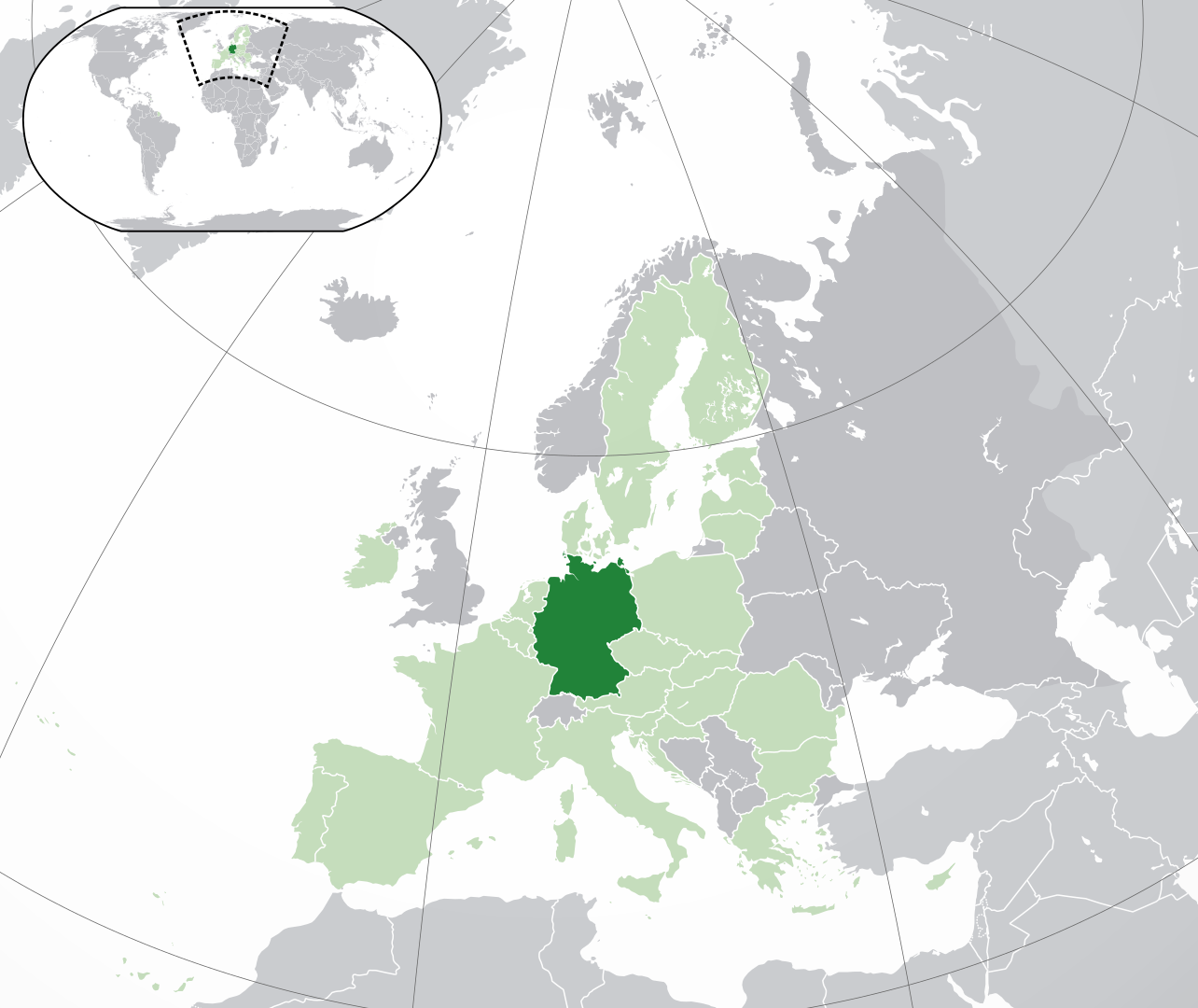
By NuclearVacuum - File:Location European nation states.svg, CC BY-SA 3.0, 

https://commons.wikimedia.org/w/index.php?curid=8087888


Jane Lambert

Art 126 of the Agreement on the withdrawal of theUnited Kingdom of Great Britain and Nothern Ireland from the EuropeanUnion and the European AtomicEnergy Community ("the withdrawal agreement") provides for a transition or implementation period, which shall start on the date of entry into force of that agreement and end on 31 Dec 2020.  During that period, EU law continues to apply to the UK under art 127 thereby enabling it to remain in the customs union and single market. That period could have been extended by up to 2 years by virtue of art 132 had the British government so wished but that opportunity lapsed on 1 July 2020.

The other significant event that occurred on 1 July is that Germany assumed the presidency of the European Union from Croatia and it is clear from the German presidency website that brexit is not a priority for the German government.  Talks between negotiators for the Commission and British government have not gone well.  Negotiations in Brussels that were supposed to last from 29 June to 3 July 2020 broke up early (see Statement by Michel Barnier following the restricted round of negotiations for a new partnership between the European Union and the United Kingdom of 2 July 2020).

According to Monsieur Barnier, the sticking points are:
"1, robust guarantees for a level playing field – including on state aid – to ensure open and fair competition among our businesses;
2. a balanced, sustainable and long-term solution for our European fishermen and women;
3. an overarching institutional framework and effective dispute settlement mechanisms."
In a speech to the General Assembly of Eurofi on 30 June 2020, Monsieur Barnier mentioned a fourth on the regulation of financial services. In his view"the UK is trying to keep as many Single Market benefits as it can. It would like to make it easy to continue to run EU businesses from London, with minimal operations and staff on the continent."  He observed:
"The UK chose to no longer be a Member State. It chose to leave the EU Single Market and stop applying our common ecosystem of rules, supervision and enforcement mechanisms. In particular, it refuses to recognise any role for the European Court of Justice.  These choices have consequences. The UK cannot keep the benefits of the Single Market without the obligations."
Negotiations between the Commission and the British government are continuing  There will be informal discussions this week and a further round of formal negotiations in the week commencing 20 July 2020.

The British government has opened negotiations to accede to the Comprehensive and Progressive Agreement for Trans-Pacific Partnership ("CPTPP") which is essentially the Trans-Pacific Partnership without the United States.  It is also conducting bilateral negotiations with Australia, Japan and New Zealand which are members of the CPTPP and well as with the USA.  I have opened a new CPTPP page to monitor the accession negotiations as well as the new partnership negotiations with the EU. I can report very little that is new with bilateral negotiations.

Anyone wishing to discuss this briefing should call my clerk, Stephen Somerville, on +44(0)7986 948267 or send me a message through my contact page.

Saturday, 6 June 2020

Michel Barnier's Statement at the End of the Fourth Round of Negotiations

Michel Barnier
By Foto-AG Gymnasium Melle,
CC BY-SA 3.0,


Jane Lambert

As I said in my May Brexit Briefing, a fourth round of talks between British and Commission negotiators was scheduled for the 2 to 5 June 2020.  They have now taken place and a statement has been made on their progress by Michel Barnier (see Statement by Michel Barnier following Round 4 of negotiations for a new partnership between the European Union and the United Kingdom 5 June 2020).

On its face, it does not make very encouraging reading.  Monsieur Barnier said that there were four big sticking points, namely:
  • "Fisheries, and free and fair competition, the so-called ‘level playing field' – two essential elements of the new economic partnership we want to build;
  • Guarantees protecting people's fundamental rights and freedoms needed to underpin a close police and judicial cooperation in criminal matters;
  • And finally, the governance of our future relationship."
On none of those issues, according to Monsieur Barnier, has there been any significant progress.  He complains that the British wish to renegotiate the Political Declaration setting out the framework for the future relationship between the European Union and the theUnited Kingdom which the Prime Minister signed and expressed concerns as to the implementation of the Northern Ireland Protocol to the Withdrawal Agreement.

There has been no parallel statement from the British side.  As I said in my comments on the British counterproposals and Brexit Briefing a lot more work has been done on the British side than might be expected for mere window dressing. Nevertheless, Andrew Bailey, the Governor of the Bank of England has warned business leaders to prepare for the present transition or implementation period to expire without an agreement (see Ryan Weeks Bank of England governor tells banks to brace for no-deal Brexit – report 3 June 2020 Financial News).

I have added Monsieur Barnier's speech and my comments to my EU negotiations page. I am also monitoring the UK's negotiations for free trade agreements with the USA and Japan.  Despite the deteriorating relationship with China over Huawei, Hong Kong and responsibility for the pandemic I am minded to monitor China's Belt, Road Initiative ("BRI").  The BRI is a massive infrastructure project over the next 30 years for which British businesses and their professional advisors are well placed to win contracts.  I am under no illusions as to the nature of the present Chinese leadership but while countries' interests remain constant governments and policies can and do change.

Anyone wishing to discuss this article or any of its topics should call my clerk Stephen Somerville on 07986 948267 or send me a message through my contact page.

Thursday, 26 April 2018

Withdrawal Agreement - Not a done deal yet

Hanover from space
Author NASA/Chris Hadfield
Licence Copyright waived by copyright owner


Jane Lambert

Monsieur Barnier was is Hanover last Monday and he gave a speech at the 8th EU Policy Reception: How hard will Brexit be for industry?. A transcript appears on the Commission's website (see Speech by Michel Barnier at Hannover Messe 23 April 2018). In it, he sketched out the sort of trade relationship that he hopes to negotiate with the British government but he also warned of the difficulties that could destroy the progress that has already been made and that "companies must waste no time, and prepare for all scenarios now" including a disorderly Brexit.

The vision that he sketched out would suit most people in the United Kingdom very well:
"Even with the UK's current red lines, our intention is to reach an ambitious and wide-ranging free trade agreement with:
  • Zero tariffs and no quantitative restrictions on goods;
  • Customs cooperation to facilitate goods crossing the border;
  • Rules to limit technical barriers to trade and protect food safety [sanitary and phytosanitary measures];
  • A framework for voluntary regulatory cooperation to encourage convergence of rules;
  • An open market for services, where companies from the other party have the right of establishment and market access to provide services under host state rules – I repeat, under host state rules;
  • Access to public procurement markets, investments and protection of intellectual property rights."
The future relationship could even extend to such fields as coordination of social security and the recognition of professional qualifications, air transport, and participation by the UK in programmes in the field of research and innovation, where participation of third countries is allowed.

However, such a relationship will be possible only if there is an agreement on the terms of the UK's withdrawal from the EU. Monsieur Barnier noted that there had been a lot of progress in the negotiations of those terms but nothing is agreed until everything is agreed. There are plenty of potential stumbling blocks such as the border between the Irish Republic and Northern Ireland and the governance of the withdrawal agreement.

During the referendum campaign and at various times since, proponents of British withdrawal have argued that our market is so important to German car makers, Italian white goods manufacturers and French farmers that they will force their governments to make concessions.   Monsieur Barnier gave two reasons why that is unlikely in his speech.  First, the trade of the remaining member states with UK may be big but but not all that big:
"Let me remind you that, for the EU27 today, 6% of trade in goods is with the UK, while 60 % of this trade is inside the EU27 Single Market. Ten times as much!"
Secondly, the single market and the principles on which it is founded matter more to the remaining member states than trade with the UK.  Professor Grey suggested a possible third in Business gets vocal about Brexit 12 April 2018 The Brexit Blog.  If the supposedly pro-business government of the UK refuses to pay heed to business interests in its own country, why should  the Commission that represents the whole EU be any more inclined to listen to the voices of business leaders of individual member states?

We may get a 20 month implementation period to allow the UK to adjust to its new status in accordance with the draft withdrawal agreement (see The Draft Withdrawal Agreement: Getting Down to Business at Last 3 March 2018) but then again we may not.  My advice to British business is the same as Monsieur Barnier's in Hanover.  Hope for the best but prepare for the worst.

Anyone wishing to discuss this article or Brexit in general should call me on 020 7404 5252 during office hours or send me a message through my contact form.

UPC Court of Appeal upholds the Mannheim Local Division's Decision on the Court's Jurisdiction in Fujifilm v Kodak

Musée de l'Élysée ,   Lausanne, World's First Photographic Museum Author Sandro Senn   Licence CC BY-SA 3.0   Source Wikimedia Commo...